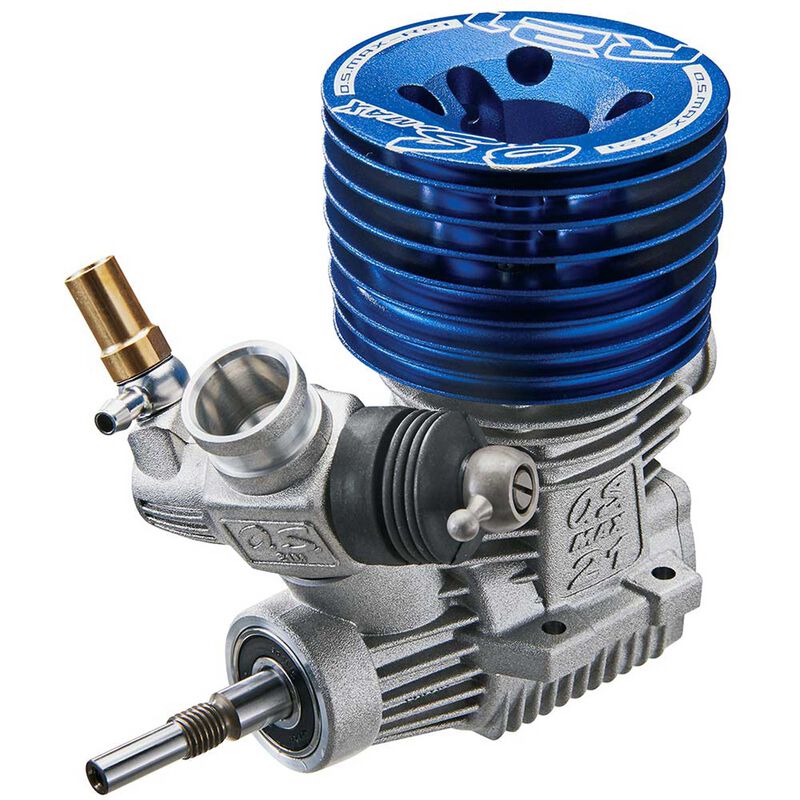
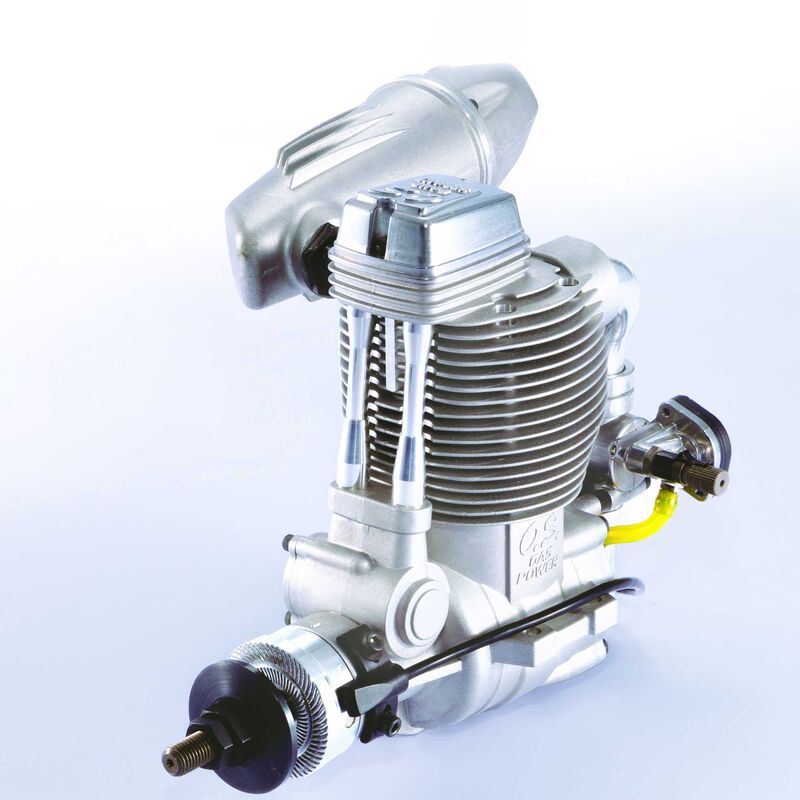
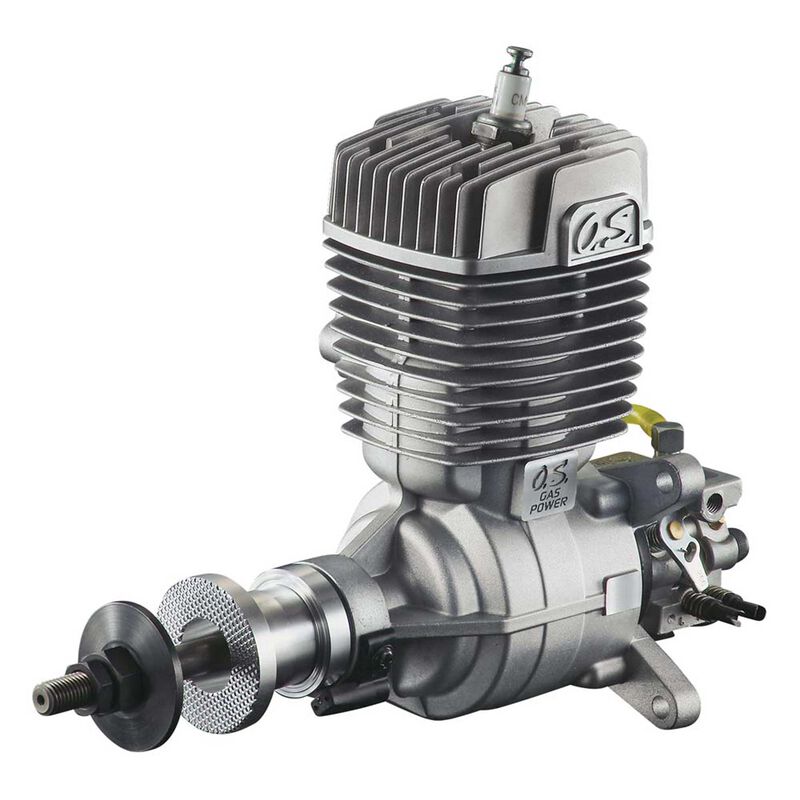
O.S. Engine O.S. ENGINES 1.40RX
ENGINE REVIEW

by Mike Billington

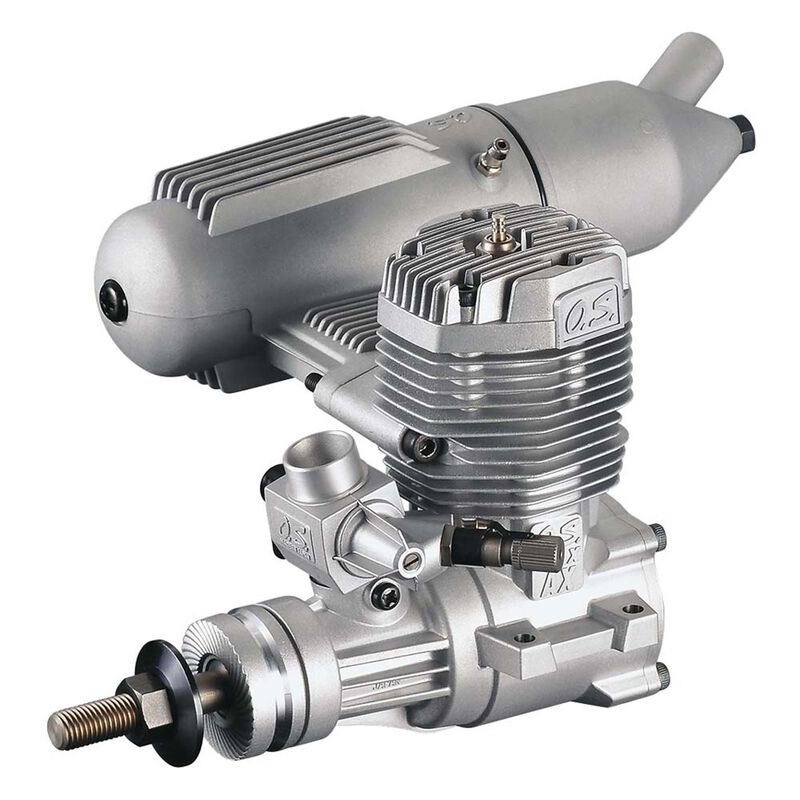
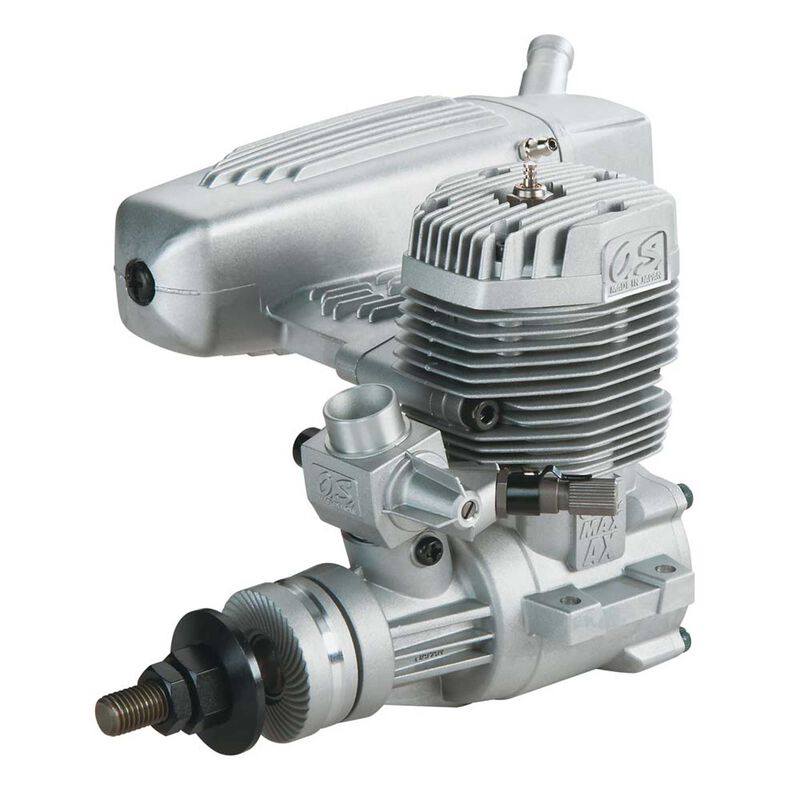
1.40RX Engine photo A new F3A Powerhouse

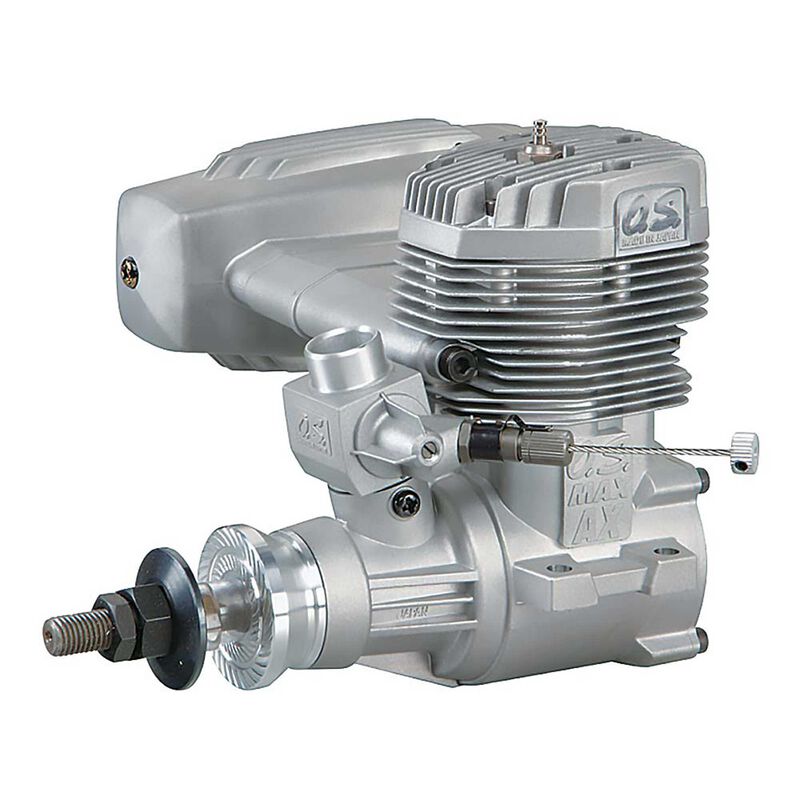
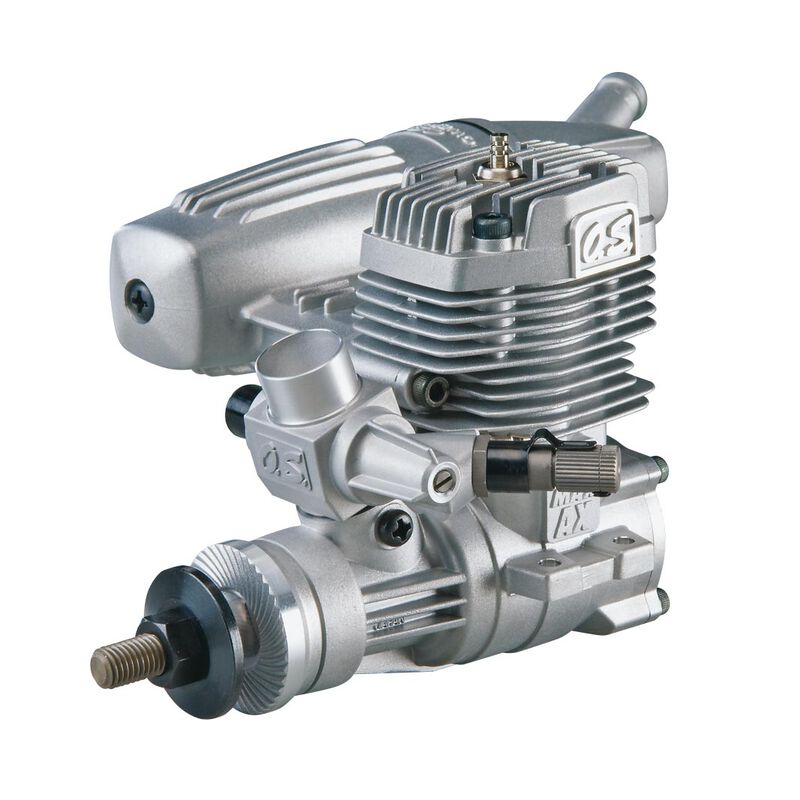
This handsome, purposeful, 23 cc 2-stroke represents the most recent thrust by this manufacturer toward success in the very prestigious F3A International Aerobatic class. Following the FAI's relaxation of engine size rules for this class, this 140RX tuned-pipe engine could well be thought of as the leader of the pack - 2-stroke pack that is, which is busily pursuing the dominant YS 120 4-stroke (which is itself undergoing a capacity increase to 1.40ci to ward off this new threat.

Given the clear power advantage that the 2-stroke can now exhibit (having been freed from the large 2:1 handicap previously enforced), the question that is now really coming to the forefront is: just why did the 4-stroke preference (advantage?) still hold in 1996?—the first year of the new regulations.

Answers from within the pattern community still resound:

These and other points could mark the end of the 2-stroke challenge in aerobatics were it not for the clear power and torque advantage that the 2-stroke seems set to enjoy for some while yet. The reason is that the possibility exists of giving up some surplus power and in return eliminating the exaggerated large response that tuned pipes usually offer.

This paves the way to less 'peaky' tuned pipes—even reversion to much milder minipipe half-wave device or the abandonment of tuned devices altogether. Comparing the very similarly shaped open-exhaust power curves of say, the YS 120 4-stroke and the O.S. 140 2-stroke has all the appearance of being a window into the future, with the likelihood that certain 4-stroke and 2-stroke engines will find themselves competing with virtually identical hp and exactly the same power curves!

The high power of this new 140RX 2-stroke should place it in a strongly advantageous position to benefit from the flexibility for power exchange referred to above. In any case, the FAI engine rule change has set the cat amongst the pigeons in a dramatic way. Future developments will be interesting to behold!

MECHANICAL DETAIL
Almost de rigeur now, the rigid and robust one-piece crankcase is a necessary feature for serious competition work in spite of high tooling costs. In contrast to the Webra 120's under-square stroke/bore ratio of 1.042:1, the 140RX opts for a quite over-square .894:1 ratio. As both engines will operate at virtually the same rpm with similar prop loads, this is an interesting commentary on the supposed necessary connection between long stroke and low rpm!

A single, ringed, aluminum piston runs in a hardened-steel liner with .003 inch skirt clearance. The 1.142-inch-diameter piston features an internally ribbed crown.

Schnuerle cylinder timings are moderate, with only a 15-degree blowdown period (between when the exhaust port opens and when the transfer port opens). Front induction timing is also moderate at 184 degrees total opening.

An unusual 8-bolt cylinder head is fitted with the glow plug protruding 1.5 mm into the combustion chamber. The effective compression ratio is fixed at a low 7.12:1 because of the need to retard ignition timing for the low-rpm regime.

A simple, bulletproof 70A carburetor has a cadmium-plated throttle barrel and cam-operated secondary fuel control. The rear- mounted, remote, main fuel needle allows the operator to escape from those fearsomely sharp APC Scimitar props or the even more fearsome 4-blade Bolly carbon propeller!

A diaphragm fuel pump (type PD-06) mounted in the rear cover ensures positive fuel supply under varying G forces. The total bare weight of only 29 ounces and high specific torque allow this deceptively simple but refined new engine to slot easily straight into a fine position in the following updated table of comparative performances of top engines so far tested by this writer. Only those engines that combine high-torque/cc and high torque/weight ratios are in this list, and this results in predominantly light aircraft engines having higher than average cylinder pressures being listed.

As can be seen, there is a clear scale effect at work that favors large engines, so any high position by small- to medium-capacity engines here is noteworthy.

O.S. PIPE
Propeller Open Ex. 725 mm 610 mm std. 550 mm

20xl0 Menz - 6,130 6,110 -
21xl0 Bally 6,235 6,440 6,420 -
18xl2 Menz 6,720 6,565 6,900 6,940
15.5xl2.5 (4-blade)
 Bolly 7,225 - 7,460 -
18x10 (3-blade)Bolly 7,330 - 7,680 -
17.5xl2 Bally 7,830 - 8,110 8,390
16xl4 APC 7,920 - 8,060 8,296
16xl2 APC 8,710 - 8,560 9,130
15x8 Graupner 10,910 - 9,790 -
15x8 APC 11,120 - 10,020 10,720

BOLLY PIPE
 770 mm 720 mm std. 670 mm 585 mm
20x10 Menz 6,360 - 6,460 -
21x10 Bolly 6,650 - 7,040 -
18xl2 Menz 6,786 7,050 7,320 -
15.5xl2.5 (4-blade)
 Bolly 7,076 7,440 7,710 -
18x10 (3-blade) Bolly - - - -
17.5xl2 Bally - - - -
16x14 APC - 7,830 8,170 8,670
16x12 APC - - 8,675 9,360
15X8 Graupner - - - -
15X8 APC - 9,890 10,200 -

PERFORMANCE
Maximum B.hp 4.03 @ 9,090rpm (Bolly pipe @ 585 mm/10%nitro)
 3.75 @ 14,130rpm (open exhaust/10% nitro)

Maximum torque: 443 oz.-in. @ 8,677rpm (Bolly pipe @ 585 mm/10% nitro)
 370 oz.-in. @ 6,700rpm (open exhaust/10% nitro)

Open exhaust methanol fuel; 5 to 10 percent nitro.

 Displacement oz.-in./lb. oz.-in./cc
 Enya 80XF 12.5 cc 142 13.6
 Fox Eagle 74 12 cc 140 13.7
 Moki 180 30 cc 164 14.13
 OPS 80 fan 13 cc 134 13.8
 O.S. BGX 35 cc 156 13.0
 O.S. 120 s/c 20 cc 132 15.0
 O.S. 91 fan 15 cc 133 14.2
 O.S. 140RX 23 cc 204 16.1
 S. Tigre G-4500 45 cc 147 14.1
 S. Tigre G-90 15 cc 176 14.9
 Webra 120 S/E 20 cc 170 14.0
 Webra Speed 50 8.4 cc 146 13.8
 3W B 120 twin 114 cc 200 14.7
 (petrol/spark)

PERFORMANCE
The ringed piston with hardened-steel liner has led O.S. to advise a meaningful running-in period of at least 10 flights. That's certainly more than for the typical ABC engine, and the need for this was clear during my tests: performance definitely improved with run time.

The propellers used covered the rpm range between 6,100 and 10,700, while torque tests allowed rpm to range between 3,500 and 14,150 to ensure that full torque and hp information was obtained.

All tests were done using: fuel-10% nitro/12 percent ML70 synthetic with 3 percent castor oils and balance methanol; plug type—O.S. A5.

It's probably no coincidence that maximum open-exhaust torque occurs at the rpm range that's likely to be used in competition, but the modem 2-stroke is seen to go on releasing power in a widespread, smooth manner. It is that type of power production, which, if we read the 4-stroke apparent advantage correctly, could so easily be harnessed in this 2-stroke by say, the use of 2-stage inline standard silencing cans. This could lead to an acceptable power loss of between 15 and 20 percent, much of which could, though, be recouped by the use of nitro.

To prevent confusion, separate power graphs have been used for O.S./Hatori aluminum- and Bolly carbon-pipe tests, showing the particular results relative to the open-exhaust tests.

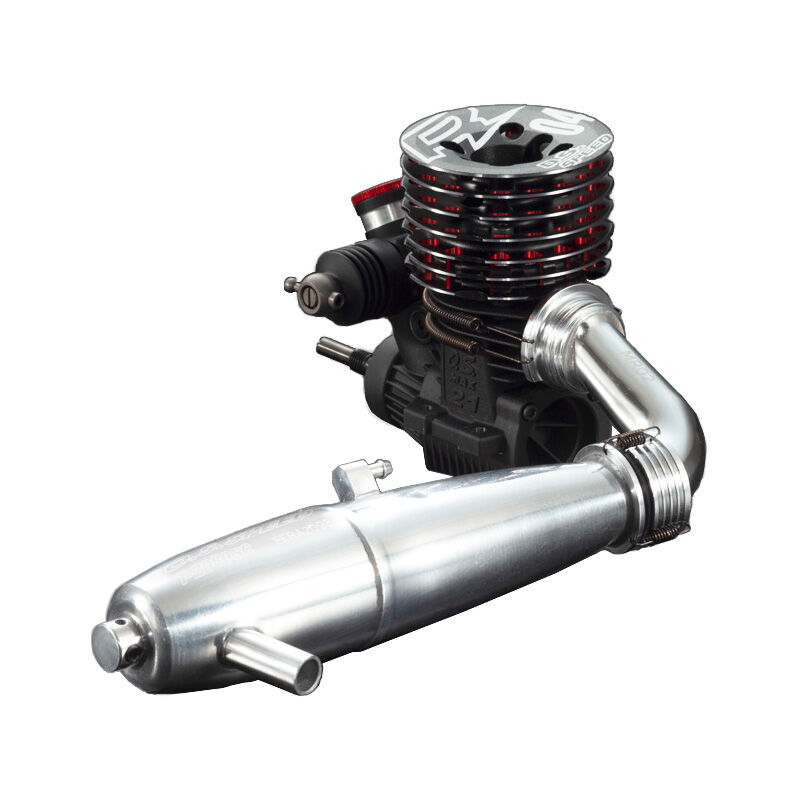
Used at the supplied length, the O.S. pipe produced best resonance in the 8K area while the Bolly's supplied length gave a lower and maybe more usable rpm range for best resonance at 7K. In both cases, though, it is quite noteworthy that highest power is not reached with the supplied lengths.

Put simply, these new, large 2-strokes are trapped in an rpm area around 7 to 7.5K because to exceed those speeds means sound- level problems, while to go lower in rpm means that power is dropping off considerably in spite of optimizing pipe lengths. The shortest Bolly pipe used here vividly demonstrates this finding because a considerable power boost is available but cannot be used in competition because of the sound checks.

From these tests, it was clear that, yet again, a Bolly proprietary carbon pipe has succeeded in generally improving torque levels when compared with the manufacturer's own favored pipe-in this case, though, with slightly sharper power peaks.

Both pipes feature the now very popular internal reflector disk rather than the more traditional reverse cone, so other internal differences must account for the power advantage revealed by the Bolly pipe.

These pipe results are as expected, with the usual steep decline in torque as rpm rise following full pipe resonance. However the recent unusual Webra 120R result proved to be less severe, and that led to a wide, fiat top to hp. So ... who will be first to match that pipe with this 140RX?

IDLING AND THROTTLE RESPONSE
Using the APC 16xl4 prop and the O.S./Hatori pipe at its standard length of 610 mm saw a range of 2,000rpm easily achieved within the quite small range of secondary needle idling control available. Response to full throttle was quite swift, though, with slight evidence of the delaying wind-up effect referred to earlier.

SUMMARY
If the 2-stroke challenge in F3A can succeed, then the O.S. 140RX will be in the forefront of that achievement. Its inherent quality alone will give it a considerable edge in this battle.

Reprinted with permission.
May, 1997 Model Airplane News
Editor: Gerry Yarrish


O.S. Engines Home Page  |  Airplane Engines  |  Car & Buggy Engines  |  Boat Engines  |  Heli Engines  |  Accessories  |  Parts Lists & Manuals  |  Product Reviews  |  Where to Buy  |  Promotions

Copyright © 2000-2010 Hobbico®, Inc. Terms of Use
All rights reserved. Do not duplicate or redistribute in any form.